
Tel Aviv old map
You can find on this page the Tel Aviv old map to print and to download in PDF. The Tel Aviv historical map and the vintage map of Tel Aviv present the past and evolutions of the city of Tel Aviv in Israel.
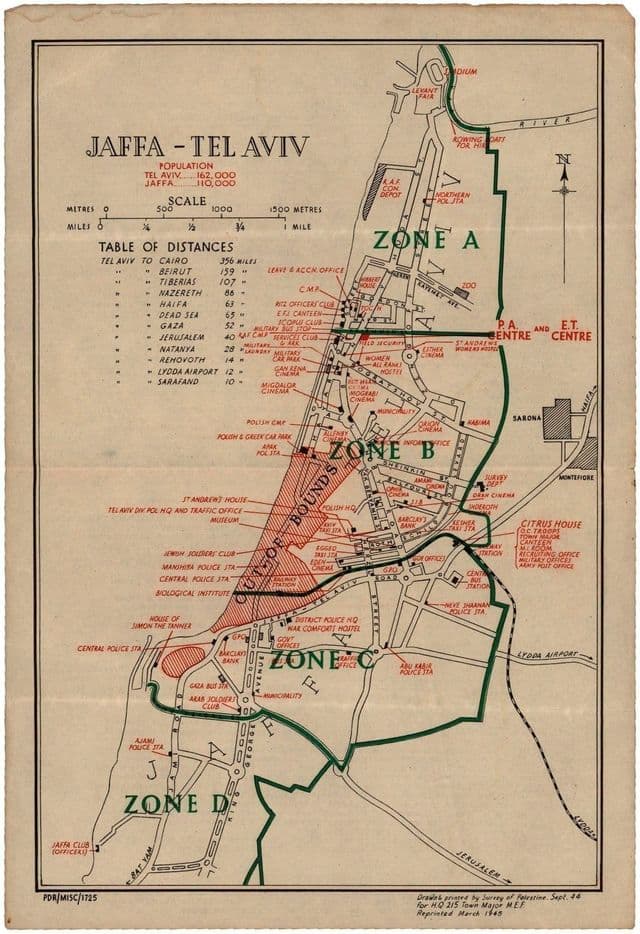
Tel Aviv historical map
The Tel Aviv old map shows evolutions of Tel Aviv city. This historical map of Tel Aviv will allow you to travel in the past and in the history of Tel Aviv in Israel. The Tel Aviv ancient map is downloadable in PDF, printable and free.
The ancient port of Jaffa changed hands many times in the course of history. Archeological excavations from 1955 to 1974 unearthed towers and gates from the Middle Bronze Age. Subsequent excavations, from 1997 onwards, helped date earlier discoveries. They also exposed sections of a packed-sandstone glacis and a “massive brick wall”, dating from the Late Bronze Age as well as a temple “attributed to the Sea Peoples” and dwellings from the Iron Age. Remnants of buildings from the Persian and Hellenistic periods were also discovered. The city, Jaffa, is first mentioned in letters from 1470 BCE that record its conquest by Egyptian Pharaoh Thutmose III as you can see in Tel Aviv historical map. Jaffa is mentioned several times in the Bible, as the port from which Jonah set sail for Tarshish; as bordering on the historical territory of the Tribe of Dan; and as the Jaffa Port at which the wood for Solomon Temple in Jerusalem arrived from Lebanon. According to some sources it has been a port for at least 4,000 years.
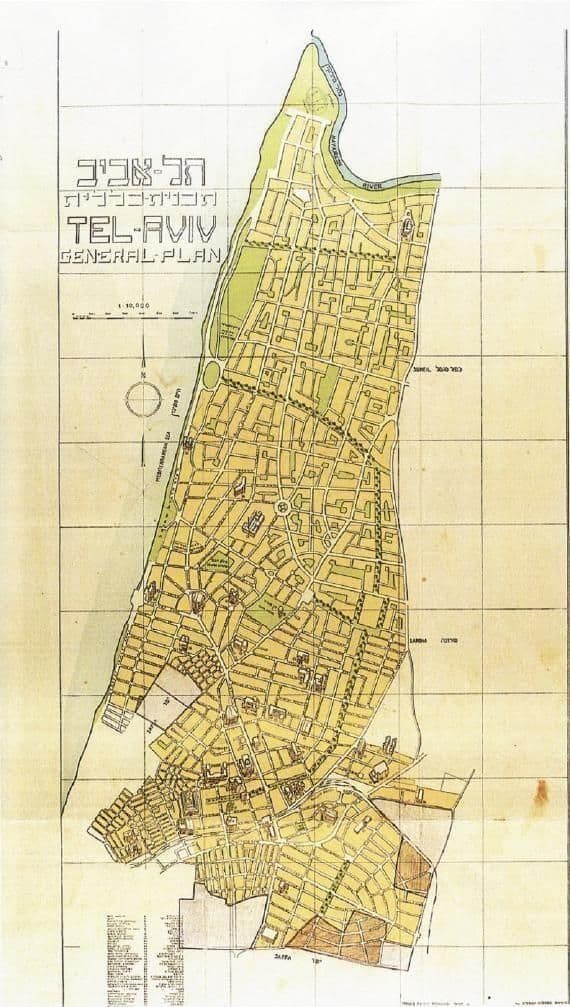
Tel Aviv vintage map
The Tel Aviv vintage map give a unique insight into the history and evolution of Tel Aviv city. This vintage map of Tel Aviv with its antique style will allow you to travel in the past of Tel Aviv in Israel. The Tel Aviv vintage map is downloadable in PDF, printable and free.
In 1896 the Yemenite Jews established Mahane Yehuda, and in 1904, Mahane Yossef. These vintage neighbourhoods later became the Shabazi neighbourhood. During the 1880s, Ashkenazi immigration to Jaffa increased with the onset of the First Aliyah as you can see in Tel Aviv vintage map. The new arrivals were motivated more by Zionism than religion and came to farm the land and engage in productive labor. In keeping with their pioneer ideology, some chose to settle in the sand dunes north of Jaffa. The beginning of modern-day Tel Aviv is marked by the construction of Neve Tzedek, a neighborhood built by Ashkenazi settlers between 1887 and 1896. The Second Aliyah led to further expansion. In 1906, a group of Jews, among them residents of Jaffa, followed the initiative of Akiva Arye Weiss and banded together to form the Ahuzat Bayit (lit. “homestead”) society. The society goal was to form a “Hebrew urban centre in a healthy environment, planned according to the rules of aesthetics and modern hygiene”. The urban planning for the new city was influenced by the ideas of the Garden city movement.